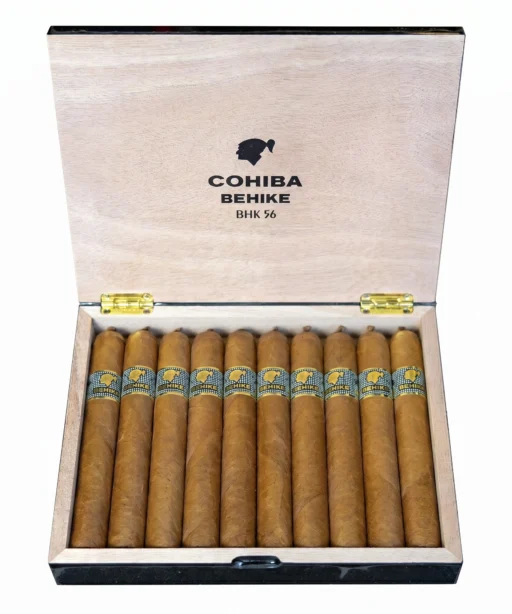
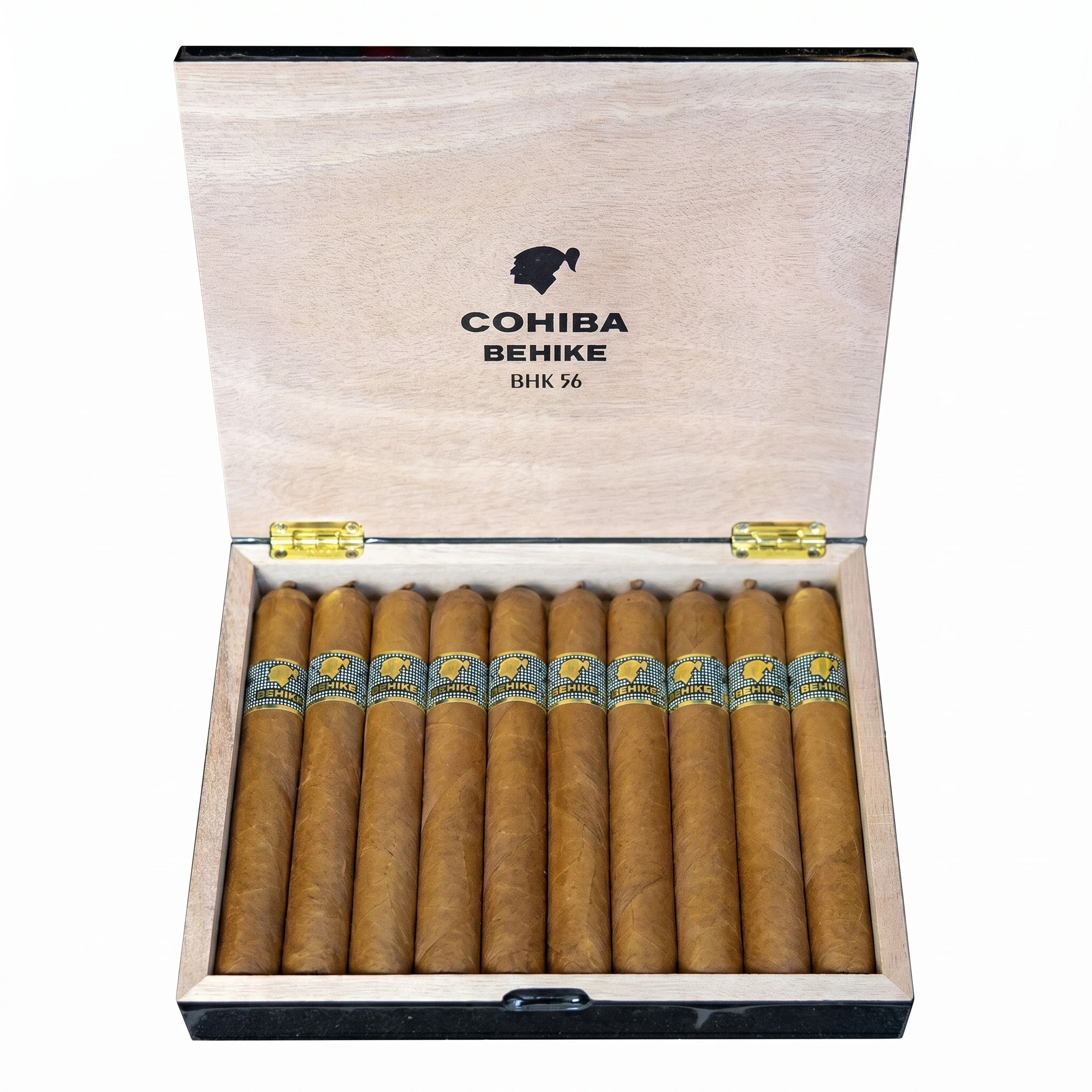
Cohiba Behike 56
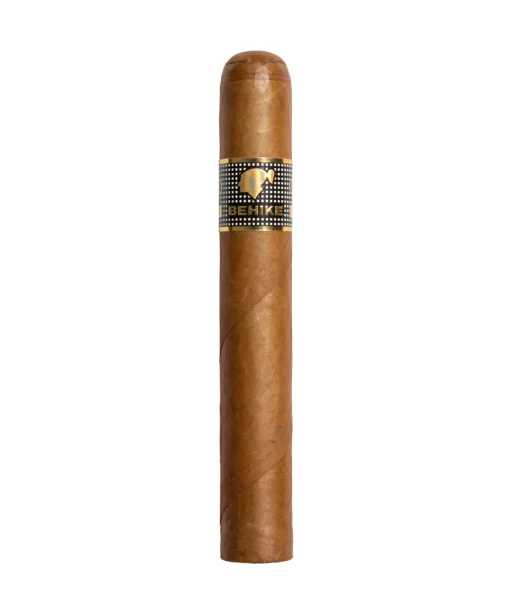
The Cohiba Behike 56 belongs to Cohiba’s Behike line, the most technical expression of the marca and the one most closely associated with medio tiempo in the filler. In this presentation the key format detail is Laguito No.6, 166 mm (about 6.5 in) x 56. The production context is Behike line, limited availability. It should be judged by vitola, construction, age and storage condition rather than by generic prestige language.
Cohiba is the flagship Cuban marca within the Habanos S.A. portfolio. The style is normally polished rather than rustic: clean cedar, cream, coffee and carefully measured spice, with the exact expression changing by line and format.
Tasting Notes
The first third opens more gradually than on the smaller Behikes: cedar, cream and clean coffee are present from the first draws, but the wider 56 ring gauge draws cooler and slower, giving the opening more room to breathe before the profile builds.
The middle third is where this format distinguishes itself. Cocoa, sweet hay, toasted almond and the deep medio tiempo character have the most space of any Behike vitola to develop, and the wider gauge means more filler tobacco is doing the work in every draw. Body is medium-to-full and listed strength is Medium to Full, but the sheer volume of tobacco gives this the richest, most layered middle third of the three sizes.
The final third stretches out over the longest smoke time in the line, 90 to 120 minutes, so espresso, cedar oil and pepper on the retrohale arrive late and linger. This is the Behike for an unhurried evening session, offering the deepest reserves of tobacco and the most gradual unfolding of the three vitolas.
Construction and Feel
At 166 mm x 56, the Laguito No.6 is the largest format in the Behike line, a wide ring gauge that keeps the draw open and the smoke cool over a 90–120 minute session. Expect a smooth Cuban wrapper, dense bunching and the slowest, most gradual pacing of the three Behike sizes, suited to smokers who want to sit with the cigar rather than move through it quickly.
Value and Experience
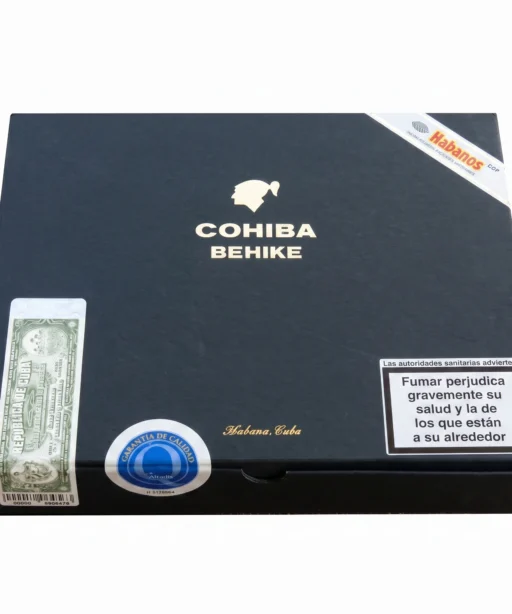
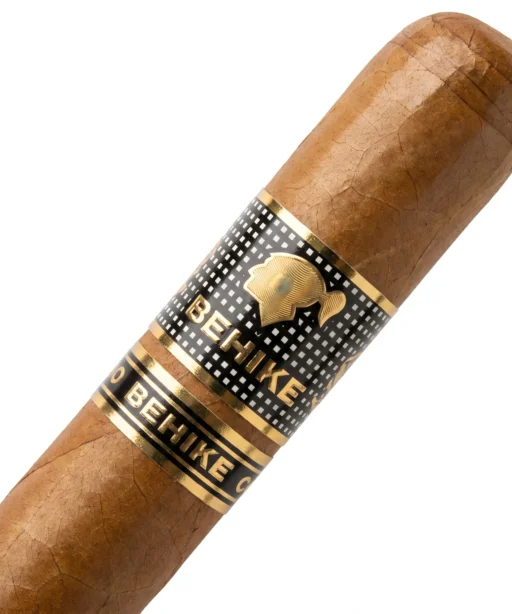
Cohiba Behike 56 is not a generic souvenir smoke; it is a Cohiba chosen for format, line identity and condition. Collectible releases should be evaluated by box integrity, seals, bands and storage history. Regular-production formats should be evaluated by construction, consistency and how well the flavour develops over the session.
Storage and Care
This is among the largest ring gauges in the catalog, and that mass means slow, deliberate equilibration; keep humidity at a steady 65–70% and avoid chasing short-term hygrometer swings. The clean, measured spice that defines Cohiba tends to flatten out under excess humidity and turn sharp when the box runs dry, so consistency matters more than any single reading. This longer format benefits from a slightly extended settling period — seven to ten days in the humidor after unboxing is a reasonable rule of thumb.
Frequently Asked Questions
What does Cohiba Behike 56 taste like?
Expect cedar, cream and clean coffee, followed by cocoa, sweet hay, toasted almond and the deeper texture associated with medio tiempo in the filler. The finish usually moves toward espresso, cedar oil and a measured pepper on the retrohale, with balance depending on age, storage and smoking pace.
Is Cohiba Behike 56 suitable for beginners?
It can be, but Cohiba rewards a slow cadence and some palate experience. Newer smokers should choose smaller or medium-bodied formats first, while collectors may prefer special releases for slower, more deliberate sessions.
Should I age this Cohiba?
At medium-to-full strength, this cigar has enough structure to benefit from one to four years of rest, with the profile becoming more integrated rather than dramatically different. With this much tobacco mass, the format has real depth to age into over a decade or more, unfolding more slowly but more completely than a slimmer vitola ever could. That evolution only happens on a foundation of stable storage; time spent in a poorly maintained humidor does not reverse itself with more time.
Related Reading