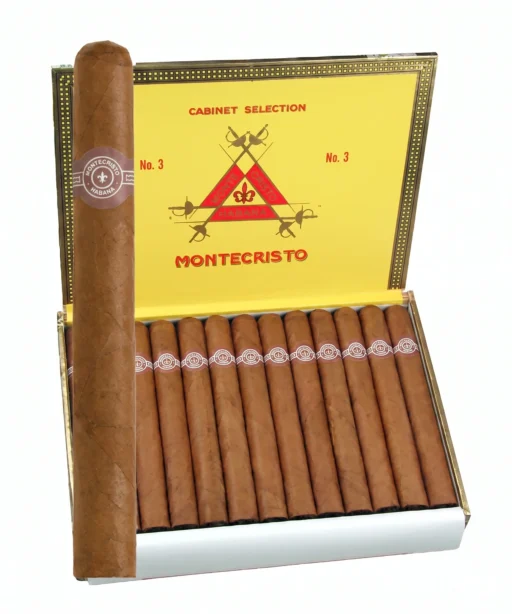
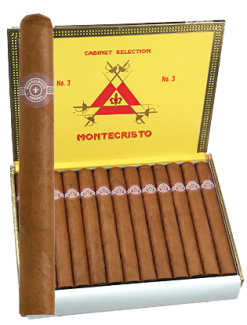
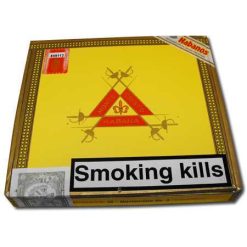
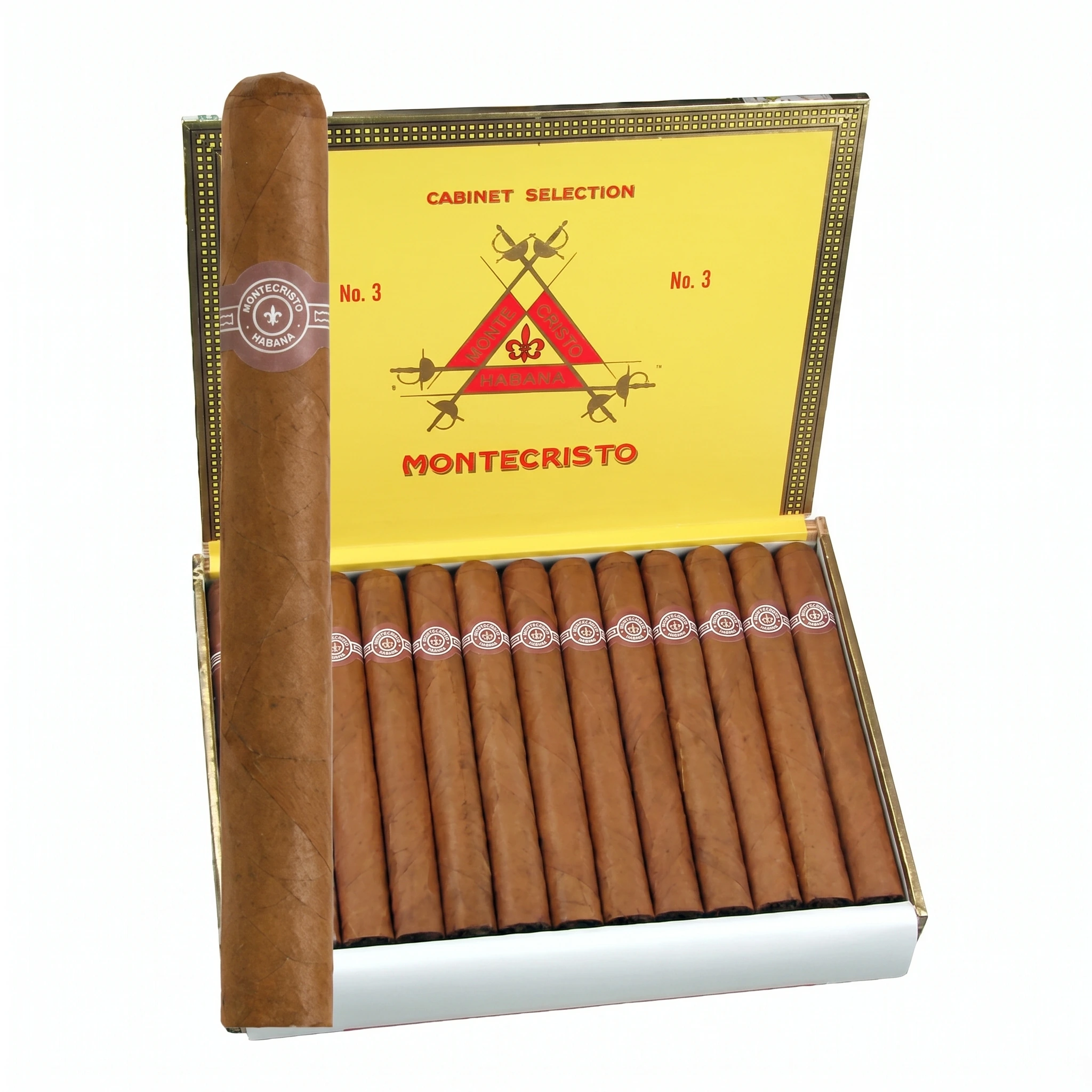
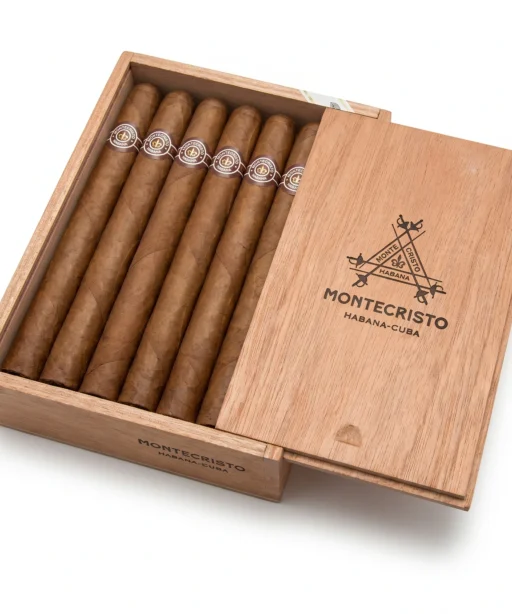
Montecristo No.3
The Montecristo No.3 reflects the classic Montecristo idea: Cuban earth, cedar, coffee and a firm but controlled structure. The key format detail is Mareva, 142mm x 42. It should read as a precise Cuban cigar, not as generic luxury copy: format, storage and smoking pace matter more than slogans.
Montecristo is one of the central names in the Habanos S.A. portfolio. Its core identity is earthier than Cohiba and more measured than Partagás, with coffee, cedar and cocoa forming the backbone of the smoke.
Tasting Notes
The first third opens with earth, cedar and black coffee. The draw should show steady resistance, enough to keep the smoke cool without muting the flavour. Early pepper should support the profile rather than dominate it.
In the middle third, cocoa, roasted nuts, leather and white pepper come forward. Body is medium-to-full, while listed strength is Medium. The better rhythm is slow and deliberate: Montecristo often shows more depth when it is not pushed hot.
The final third moves toward espresso, cedar and a dry tobacco finish. Well-stored examples keep the earth and cedar integrated; tired or overheated examples can become dry, so humidity and cadence are important.
Construction and Feel
The Mareva format at 142mm x 42 sets the tempo. Expect a firm bunch, clean cap work and smoke output that builds gradually. If the burn wanders, a small correction is preferable to drawing too hard.
Value and Experience
Montecristo No.3 should be evaluated by format, age and provenance. For regular-production cigars, consistency and balance matter most. For limited, vintage or ceramic presentations, condition and storage history are part of the experience.
Storage and Care
A standard 65–70% relative humidity in Spanish cedar suits this format well, with equilibration happening at a moderate, predictable pace. The cedar and cocoa backbone that defines Montecristo needs a steady mid-range; too dry and the earth turns bitter, too damp and the coffee notes disappear. Given the length of this format, allow seven to ten days after shipping for the cigar to acclimate fully before smoking.
Frequently Asked Questions
What does Montecristo No.3 taste like?
Expect earth, cedar and black coffee, then cocoa, roasted nuts, leather and white pepper. The finish usually moves toward espresso, cedar and a dry tobacco finish, with strength and body shaped by vitola, age and storage.
Is Montecristo No.3 stronger than Cohiba?
Not always. Montecristo often feels earthier and more coffee-driven, while Cohiba usually reads creamier and more polished. Strength depends on the exact vitola and release.
Should I age this Montecristo?
At medium strength, aging brings modest but real gains — six months to two years is usually enough to soften any rough edges and let the profile settle. This corona-family gauge ages at a fairly even pace, showing gradual rather than sudden shifts in character over time. None of that happens on its own, though — a cigar that has spent time in unstable conditions will not recover simply by sitting longer.
Related Reading